Every bridal gown begins the same way: a blank sheet of paper, a pencil, and a question.
Not what does the dress look like — that comes later. The first question is quieter. It is about the woman who will wear it. How she moves. Whether she prefers to feel held or unencumbered. Whether she wants the room to go silent when she enters, or whether she wants to feel invisible to everyone but one person.
This sketch began with the second kind of bride.
The Line
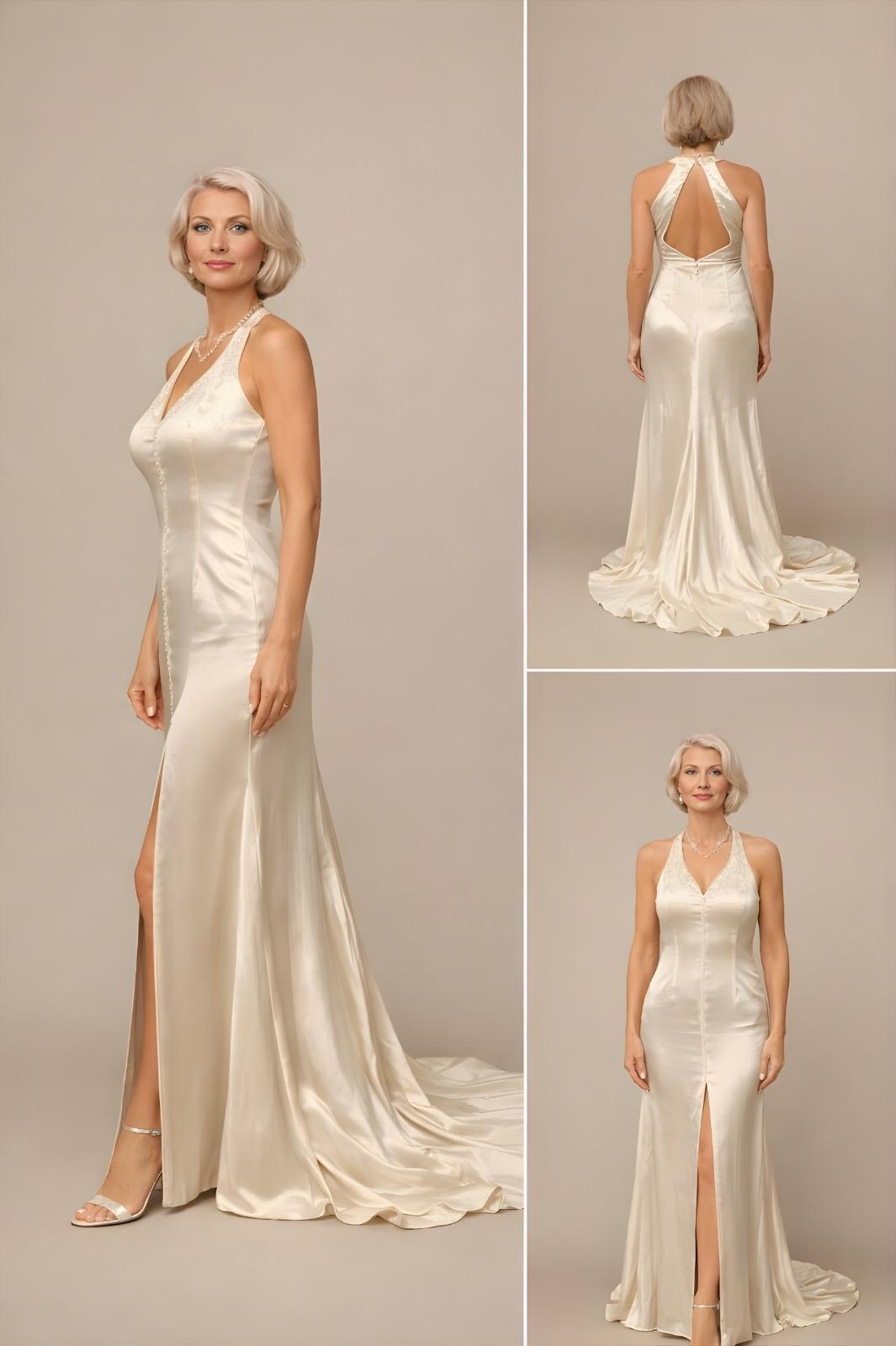
The silhouette starts at the shoulder and does very little to announce itself. The neckline is a gentle scoop — not a statement, just a frame. The bodice is fitted through the torso without boning, relying instead on a precisely cut duchess satin that holds its own shape. The waist is marked but not cinched. The transition into the skirt is the moment the sketch took longest to resolve.
A princess seam was tried and discarded. It felt mechanical. A seam at the natural waist created a horizontal break that interrupted the eye’s journey downward. In the end the answer was almost nothing: a very slight release of fabric from the side seams, invisibly gathered at the back, creating a fullness that builds slowly rather than erupting.
The train is long. Four metres from waist to hem, cut on a slight diagonal so that when the fabric is in motion it catches the light differently from every angle.
What the Sketch Does Not Show
Sketches are honest about line and proportion. They are less honest about texture, weight, and time.
What this drawing cannot convey is how long the back seam took to press. How the train needs to be handled during the ceremony — not because it is difficult, but because it deserves attention. How the satin will read differently in morning light versus candlelight. How a dress like this, worn once, will spend decades in a box before someone opens it and finds the shape still intact.
That is what makes the first sketch worth keeping.